Sunday, October 27, 2013

Day 4 - Let the Ruins Begin

So many steps. The Incas must have been the most fit civilization in history. I think I know why they call them ruins...because anyone who walks them is left in ruins.  The high altitude just added to the challenge. And this was just the warm up...Machu Picchu, the biggest and most challenging Incan ruin is still to come. 

Despite the consistent gasps for breath all day on Wednesday, the sites and views were magnificent and worth the effort. 


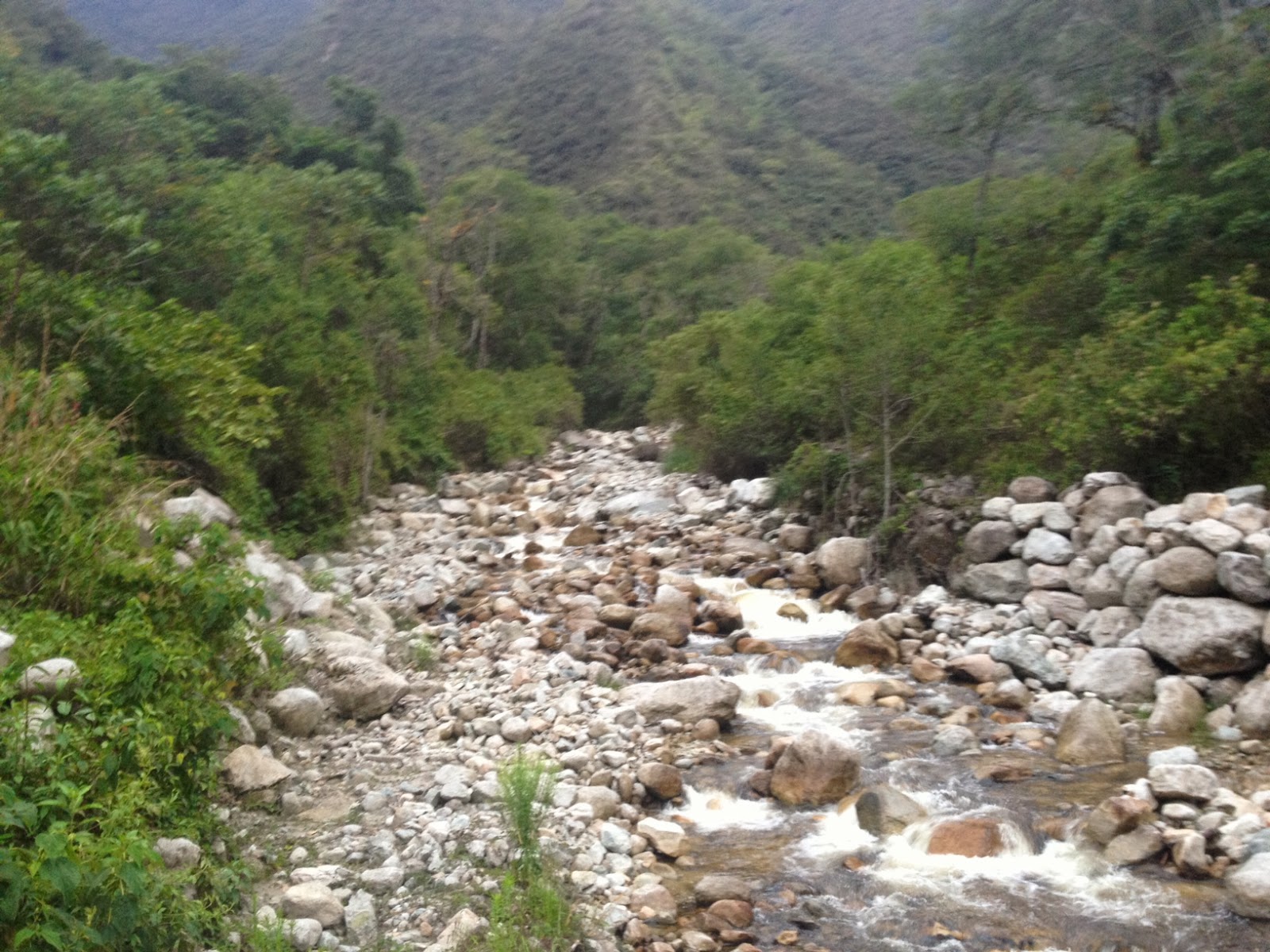
A view of the Sacred Valley with the Urubamba River, which runs through the entire valley including around Machu Picchu mountain.

The group of 20 or so taking today's tour left Cusco around 8:30am. Well, most of the group left at 8:30. The two of us and our new French friend Valerie were originally left off the list.  Once the organizers figured out what happened, we had to run through town to chase down the bus. 

Once on the bus we visited numerous places - ruins, towns, markets, etc. - and I'll let the photos do the talking.


Our first stop was the small craftsman town of Pisac. It was nestled in the Sacred Valley with the massive mountain on one side and the Urubamba River on the other.

Alpaca fur is a hot commodity all over Peru and it's available on just about every street corner and market stall. As a new resident of a cold weather city, I figured I should stalk up on winter attire.

Greg was also stocking up on winter gear, but he opted for a Despicable Me Minion beanie that also matched the colors of his shirt.

While in Pisaq we stumbled upon an empanada guy - not a restaurant or cafe - just a dude and his son with a real-deal wood-fired oven and massive spatula making tasty cheese and onion empanadas. 

Fresh empanada dough waiting to be tossed into the oven.

Now that the tasty empanadas have wet your appetite, have you heard of cuy? It's Spanish for roasted guinea pig and it's a popular Peruvian dish that we've been wanting to try. Greg and I were on board until we saw this...real live adorable guinea pigs that looked like the pets we grew up with. This "guinea pig den" was all of seven feet from a massive oven giving us the impression that these little guys' time was limited.

Pisac is one of the most well preserved Incan ruins in the area. It served as an Incan military post and grew into a ceremonial and residential center. 

Incans used the circular terrace style design to grow crops and other agriculture on steep hillsides.

Awwww...

Another stop we made was at Ollantaytambo, a living Incan town with locals continuing ancient traditions such as their farming methods. People have lived in this town since the 13th century.

Greg doing his best Rocky Balboa impression after climbing the many steps of the Araqama Ayllu fortress in Ollantaytambo.

The Ollyantaytambo ruins is one of the finest examples of Incan stonework and shows that they were masters of architecture, especially building within the confines of the mountainous environment. Look closer and you can see Greg at the top of the fortress.

Matt taking a traditional Incan shower.

Llamas or Alpacas? We still can't figure out the difference, but both are very prevalent in the Sacred Valley.

The BMW wasn't cutting it, so Greg picked up a tricked out tuck-tuck, the real Ultimate Driving Machine.

The all-day tour wrapped up in Ollantaytambo at 4pm. We then jumped onto the Inca Rail train to Aguas Calientes, the small town at the bottom of Machu Picchu mountain. The two-hour train ride was by far one of the most scenic train rides we've ever taken. On one side of the tracks was a rushing river and on the other was beautiful mountains with endless green wilderness. It almost felt like Disneyland's The Jungle Ride. Only if the conductor came on the loud speaker and said, "Remain seated please; permanecer sentados por favor."


Our chariot to Machu Picchu.

All aboard!

Sites from the train. 

The Inca Rail train ran along side the Urubamba River.

The train tracks ran along the Sacred Valley floor.

More scenic views from the Inca Rail train.

We pulled into Aguas Calientes around 6:30pm just after sunset. The entire city is about one square mile, so it was easy to find our hostel. We settled in and got ready for dinner.

With such an exhausting day and an early start on Thursday, we decided to keep the night time mellow. We grabbed a quick bite and a digestif with a few new friends from today's tour and called it a night.

The plaza in Aguas Calientes welcomes visitors with statues of Incan chiefs and warriors.

The Urubamba River ran right through town with massive mountains on either side.

The hostels, restaurants, cafes, etc. of Aguas Calientes were all built into the side of the cliffs.

Aguas Calientes is a tiny town with the Inca Rail tracks acting as the main "street." The tracks were lined with cafes, restaurants, and hostels.

Tomorrow is plain and simple...all day at Machu Picchu trekking around its peaks, vistas, and sister mountains. It should be a good one.

Oh, also, Greg and I have both managed to avoid altitude sickness. We've had lots of water, a few altitude pills and numerous cups of the coca tea that locals prescribe, which may or may not have leaves from the same plant that produces cocaine. 

Saturday, October 26, 2013

Day 3 - Fly Lima to Cusco, Fighting Altitude Sickness

Hello All - We're back up and running. We weren't able to upload photos while in Cusco and Machu Picchu and since we know the photos are the best part, we decided to hold off until we were fully functional. 

Anyway, where were we...ah, right, Greg and I were wrapping up the first leg of the trip in Lima and about to fly out to Cusco....

Denver, Colorado is 5,690 feet above sea level at its highest point and considered one of the highest major cities in the U.S.  A few years ago when I visited Breckenridge, a ski town outside of Denver that sits at 9,600 feet, I suffered altitude sickness with headaches, vomiting and overall discomfort. 

Cusco, Peru, where we flew to on Monday nearly doubles the altitude of Denver at approximately 11,156 feet. So, according to my calculations, I'm fucked! Both Greg and I procured some altitude pills in Lima and have been popping those every 6-8hrs, so we shall see.
Our flight was at 10am and we landed in Cusco around 11:15am. We checked into our hacienda style hotel in the heart of town and sorted out our Sacred Valley and Machu Picchu tour for Wednesday and Thursday. Once we were set, we headed out to explore Cusco. 


Flight 809 from Lima to Cusco.

Cusco from above.

A guy at the baggage claim area had a sign with my name on it...I'm a big deal in Cusco.


Greg outside of Hotel Marqueses, our humble abode while in Cusco.

It was a traditional Spanish style hotel with a cobble stone patio and the rooms around the outside.

Cusco was the capital of the Incan civilization for over two centuries (1400s, 1500s and some 1600s) and served as the dynasty's administrative, religious and military hub. It sits in the heart of the Sacred Valley making it the ideal central location for Incas from all over the region to meet, trade, and worship. It continues to serve as a cultural thoroughfare today as travelers from all over Peru, South America and the world come to experience the Incan homeland. 

By far the most beautiful aspect of Cusco is its 16th and 17th century architecture. From the main cathedral to the museums to the plazas, they are all so big, sturdy and beautifully designed. In fact, in the 1600s the Spanish arrived and built a wide variety of their own structures along side or on top of the existing Incan buildings, but in the earthquake of 1650 most of the Spanish buildings were heavily damaged while the Incan foundations remained in tact. 


The Cusco Cathedral is at the center of town on the east side of the main plaza, Plaza de Armas.

The Cathedral was renovated from 1997-2002.

The Cathedral pays tribute to Renaissance on the outside and Baroque on the inside.

A view of Plaza de Armas which is the main square in Cusco.

Like Lima, Cusco is filled with color all over the city; Greg also adds a bit of color to any city he visits.

For some reason, Irish pubs are a universal concept in cities around the world. No matter what city - big or small - you visit, you're guaranteed to find a pub with the name O'Malley's, O'Brian's, Malloy's, etc. They may not be the most authentic, but they serve cold beer and traditional tasty bar food. With that said we bounced into one of Cusco's Irish joints called Paddy's Pub (unfortunately Dennis, Mac and Charlie weren't working).  We were going for a drink, but found ourselves in the midst of a crowd of soccer fans watching Champions League matches...perfect.


Paddy's Pub touts itself as the highest Irish-owned pub in the world.

Footie watching at Paddy's; it was really cool because there were fans from all over the world there watching and cheering on their teams, it was kind of a mini World Cup vibe.

Once the final whistle blew, we were back to the streets to continue our Cusco exploration. We popped in and out of shops, all of which were selling pretty much the same souvenir trinkets.

Night time rolled around and we ventured out to find a dinner spot and perhaps some extra curricular activities. We stumbled upon a cozy back-alley place called Kushka...Fe. It had seven tables and a small bar and the menu was predominantly traditional Peruvian, which is exactly what we were looking for.


Cusco at night; houses line the surrounding mountains making for a beautiful night time view.

The streets of Cusco are mostly cobble stone giving it that colonial look and feel.

On our hunt for dinner we came across a Cusco food truck, but opted to skip it this time.

Greg went with the Pollo Saltado, which is a stir fry of meat, onions, rice, potatoes, and more.

I went with Alpaca steak in a stroganoff-style mushroom sauce.

Kushka...Fe was a great find in the back streets of Cusco and filled us up.

After dinner we jumped back to Paddy's for drinks - Cusco is small, so everything is within walking distance. Paddy's was lively with patrons including a group fresh off a four-day Inca Trail hike. We made friends with them pretty quickly as they were eager to share their hiking battle stories with anyone willing to listen. The group included Irish, English, Aussies, and Canadians - pretty much every English country except the U.S. - so we rounded out the bunch. After some beer boat races, lots of laughs, and exchanging of email addresses, we shut the bar down and went our separate ways. 

The Paddy's Pub group.

On Wednesday we hit the trails on a 3-day, 2-night Sacred Valley and Machu Picchu tour. It's time to get out our hiking shoes and walking sticks and see just how out of shape we are. 


Monday, October 21, 2013

Day 2 - Lima Time! Skulls, Cliffs, & Duck

Lima is a colorful city in many ways. It's filled with a wide variety of painted walls, houses, doors, and sidewalks making it literally a colorful city. It's like walking through a coloring book. Then you have the green trees, hazel and grey sky, yellow, pink and red flower beds, and of course the blue ocean. Perhaps the most colorful aspect of the city is the people.  They come from a wide variety of backgrounds. There is the obvious influence of the Incas and the Spanish, but do to its location on the Pacific coast, there is also heavy influences from Asia.  The result is a vibrant city filled with an equally beautiful population.

Colorful doors can be found throughout the city.

City walls give the city a vivacious appeal.

Mas colores de la ciudad.

We managed to wake up at a reasonable hour on Monday (10am), which allowed for a full day of Lima Time! Greg and I spent the early afternoon further exploring Miraflores, the commercial hub of Lima with shopping areas, art galleries, cafes, parks, churches, museums, and the beautiful cliff-side walking path.

The seaside cliffs are one of Lima's most popular outdoor destinations and with views like this, you can see why. This a view from Larcomar, the shopping area that is built into the side of the cliffs.

Iglesia de la Virgin Milagrosa (Church of the Miraculous Virgin) dates back to 1939...and I thought I was on a dry spell.

Parque Kennedy (as in JFK) is filled with arts & crafts vendors, food booths, and couples dancing to local music.


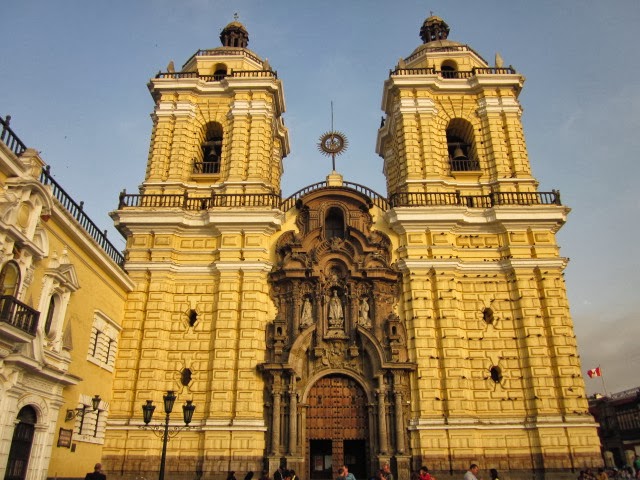
Lima's streets are flanked by Colonial mansions, pre-Inca ruins, historic churches, and museums full of treasures. Perhaps the most recognizable is the yellow and white Colonial Monastery of San Francisco

San Francisco's facade is one of the best examples of 17th-century Baroque architecture in Peru.

The massive doors to the main chapel.

A look at the vaulted ceilings of San Francisco's main chapel.

Greg walking through the tight walls of the eerie catacombs underneath San Francisco.

The catacombs of San Francisco still have bones of  the many who were buried there back in the Colonial period. 

Greg outside of San Francisco trying to avoid being covered in guano (a prime commodity for the Peruvian culture in the 19th  century).

Matt lending a helping hand to the local law enforcement.


After our trip to the city center, we had the pleasure of experiencing a real Peruvian rush hour on our way back to Barranco.  Once we finally made it home, we cleaned up and headed out to dinner.  Tonight's culinary destination was Fiesta, a restaurant that originated in the northern city of Chiclayo and made it's way south to Lima a few years ago.

Matt getting ready to feast at Fiesta.

Peru's signature drink is the Pisco Sour. Pisco is a local alcohol that is a bit like cachaza in Brazil or rum in the Caribbean.

Grilled ceviche with fried potatoes.

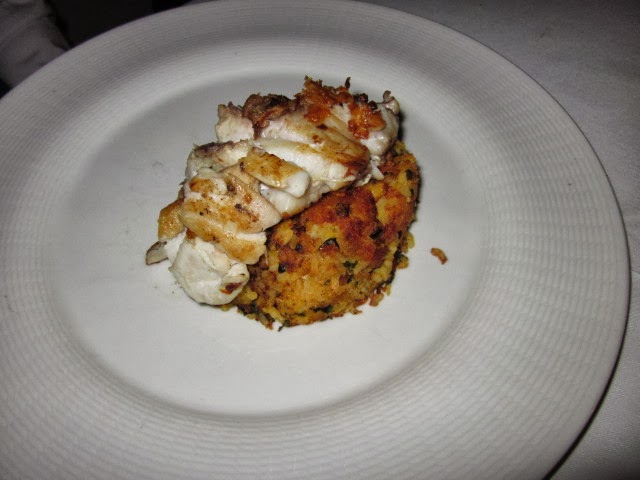
Grouper tenderloin with Tacu-Tacu (Peruvian rice and beans).

Arroz con Pato (Rice with Duck) is a traditional northern Chiclayana dish that has made its way on to menus throughout Peru.

It was a complete day in Lima. We enjoyed the outdoors, did some site seeing, explored some ruins, and feasted on another great meal. On Tuesday, we take an hour and a half flight from Lima to Cusco, the picturesque town in the Andes that acts as the first gateway to Machu Picchu.  We are spending two days in Cusco then heading to Machu Picchu for a day and then coming back to Cusco for a fun night on Friday. 

With limited internet access in the high mountains, we'll do our best to get timely posts up, but don't be alarmed if TIS goes dark for a couple days.